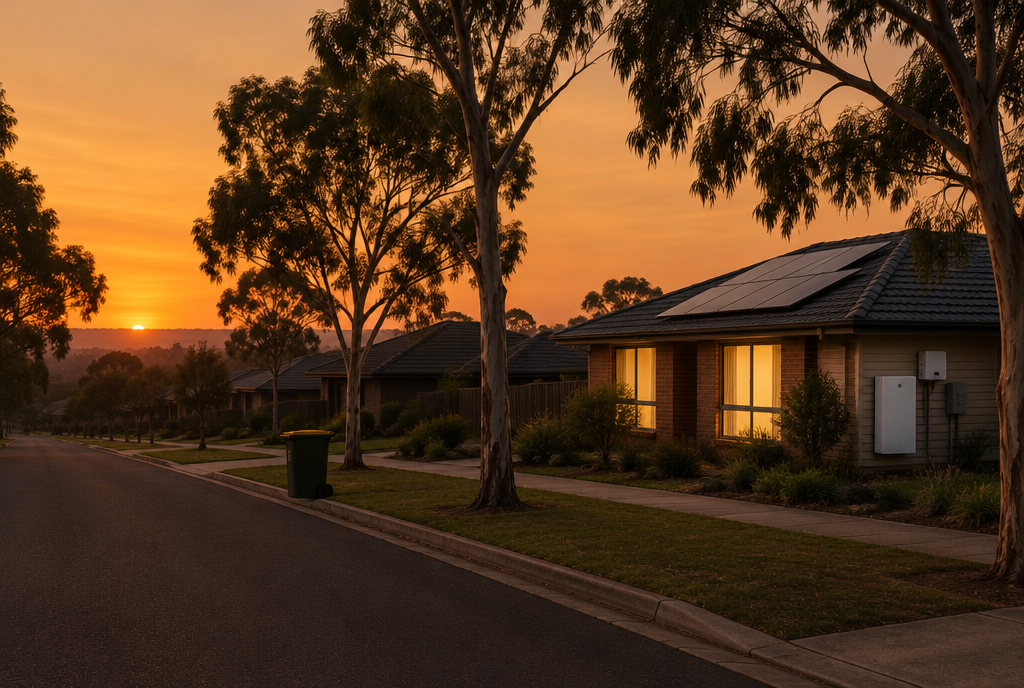
Why does energy resilience matter?
Storms, floods and fires can disrupt grid infrastructure and cause widespread outages. The National Climate Risk Assessment from Australia’s Climate Service estimated that climate-driven impacts could affect Australian property values by up to A$611 billion by 2050.
Why a battery doesn’t automatically mean backup power
“Has a battery” is not the same as “has backup power”. A home battery can provide backup power during an outage, but only if your system is specifically configured for it.
A standard grid-tied solar and battery system will typically shut down along with the grid during a power cut, for safety reasons.
Protecting your home in an outage
Most residential solar and battery systems are grid-tied. They work in sync with the grid, exporting surplus energy and drawing from it when needed.
Grid-tied systems must shut down automatically during an outage, even if your battery is full. This protects the engineers working to restore power from your system feeding electricity back into the network.
To get backup power during a blackout, your system needs extra equipment. Typically that includes:
- An automatic transfer switch, which isolates your home from the grid during an outage.
- A backup or off-grid operation rating on your battery and inverter combination.
- A separate backup circuit for essential loads (such as your fridge, lighting and some sockets), rather than your entire home.
This is a specific configuration and a decision you have to make. Not every solar-plus-battery system includes it. If backup power matters to you, say so up front when you get quotes rather than assuming it comes with the set-up.
How to know if your system is backup configured
Ask your installer directly, instead of assuming your system will protect you in an outage:
- Is this system grid-tied only, or does it include backup or off-grid capability?
- Does everything in my home stay powered during an outage, or just certain circuits?
- How long could the battery realistically run my essential loads with little or no solar input, for example overnight or on an extremely cloudy day?
- Does adding backup capability change my eligibility for feed-in tariffs or other export schemes?
How does this connect to savings?
Resilience is a benefit on top of the financial numbers. The average returns in EnergyBrain’s modelling are based on bill savings, not on outage protection.

Get a solar and battery assessment for your address
Emily measures your roof from above and shows your saving, payback and return as ranges. About a minute, no sign-up, no installer calls unless you ask.
Frequently asked questions
Will my solar panels work in a blackout?
Grid-connected solar systems normally shut down in an outage unless they are set up for backup. A battery system configured for backup can keep supplying power.
Can I add backup capability later if I start with a standard system?
It depends on your existing inverter and battery. In most cases it is more straightforward and cost-effective to specify backup capability from the outset, if you are sure you want it.
Keep reading
Sources
Editorial note (October 2026): figures in Emily’s assessments are estimates based on modelling of Australian rooftops and are not a guarantee of savings, returns or performance for any individual home. Actual results will vary by property. This article is general information, not personalised financial advice.